 Save
Save I discovered the magic of balance one evening when a friend arrived with a simple philosophy: everything tastes better when it tells a story. We spent the next hour arranging cheeses and fruits into opposing curves, and somewhere between the creamy goat cheese and the peppery blue, I realized we weren't just building a board—we were creating a conversation. The blackberries became our centerline, our meditation, our reason to pause and appreciate how opposite flavors actually belong together.
I made this for my partner's book club, and something unexpected happened: nobody touched their phones. They kept reaching for another combination, another pairing, debating whether the blue cheese matched better with the plum or the grapes. Food became an excuse to linger, and that's when I knew I'd built something worth repeating.
Ingredients
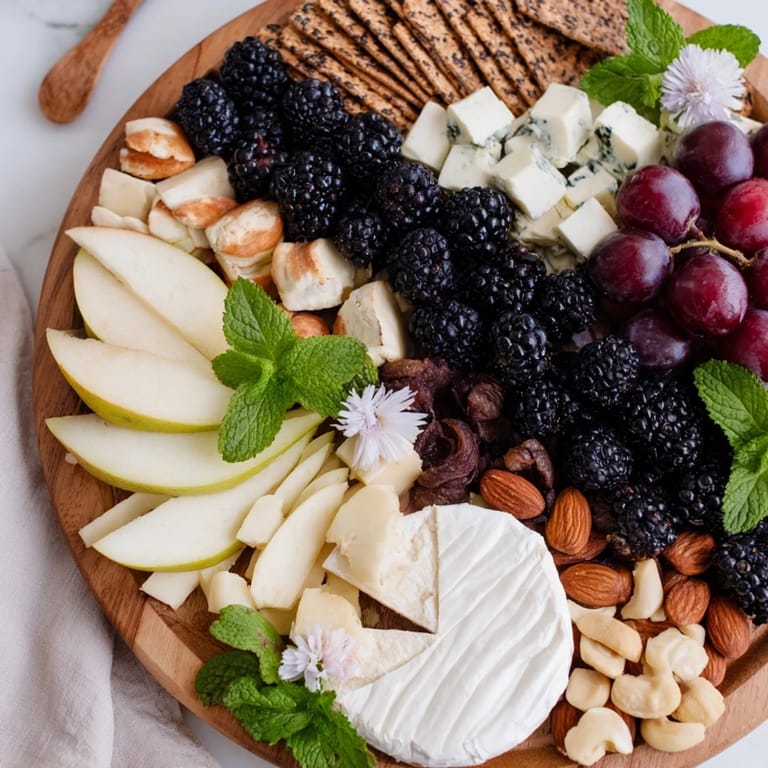
- Fresh blackberries (150 g): These aren't just a dividing line—they're your edible paintbrush that holds the entire concept together, so pick berries that are plump and glossy.
- Goat cheese and aged blue cheese (200 g total): One creamy and tangy, one intense and funky; this pairing is the soul of the board, so splurge slightly on quality.
- Young Manchego or white cheddar and aged Gouda or sharp cheddar (200 g total): Different ages create different textures, and that contrast is what makes guests keep reaching back.
- Pear and black plum (1 each, thinly sliced): Slice these just before serving so they don't brown; their sweetness bridges the gap between cheese textures.
- White grapes and red or black grapes (100 g total): These are your palate cleansers, your tiny juicy moments that reset your taste buds between bites.
- Raw almonds and roasted hazelnuts (60 g total): The raw ones stay delicate on the light side, while roasted ones anchor the dark side with earthiness and slight bitterness.
- Rice crackers and dark rye crisps (60 g total): Light crackers shouldn't steal the spotlight from the delicate pear; dark ones can stand up to bold blue cheese without disappearing.
- Fresh mint leaves and edible flowers: These are your finishing touches—they catch light and remind everyone that food can be beautiful.
Tired of Takeout? 🥡
Get 10 meals you can make faster than delivery arrives. Seriously.
One email. No spam. Unsubscribe anytime.
Instructions
- Set your stage:
- Place your round board in front of you like an empty canvas. Round matters because it naturally draws the eye inward, making the curve feel like it was always meant to be there.
- Create the dividing line:
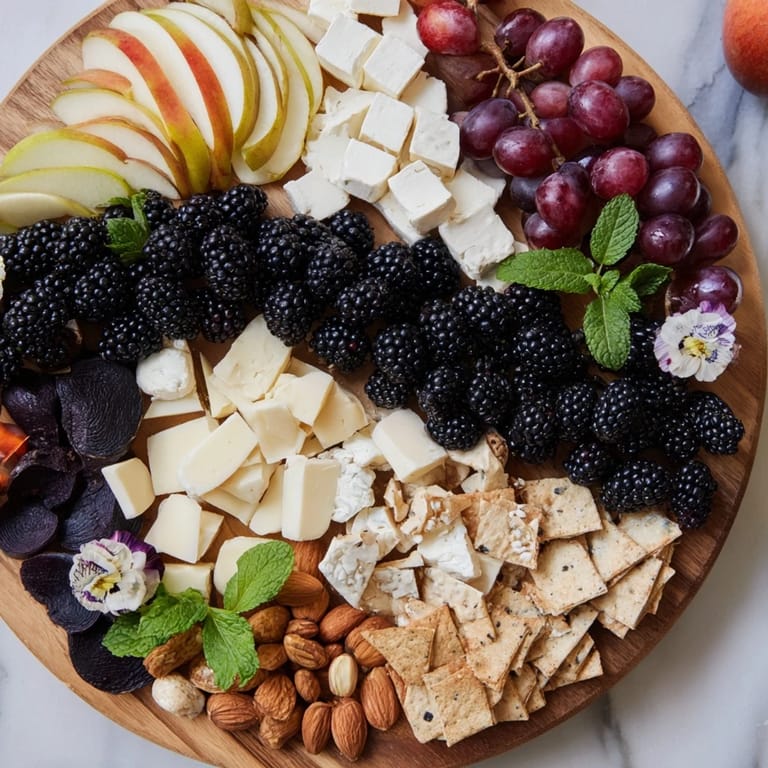
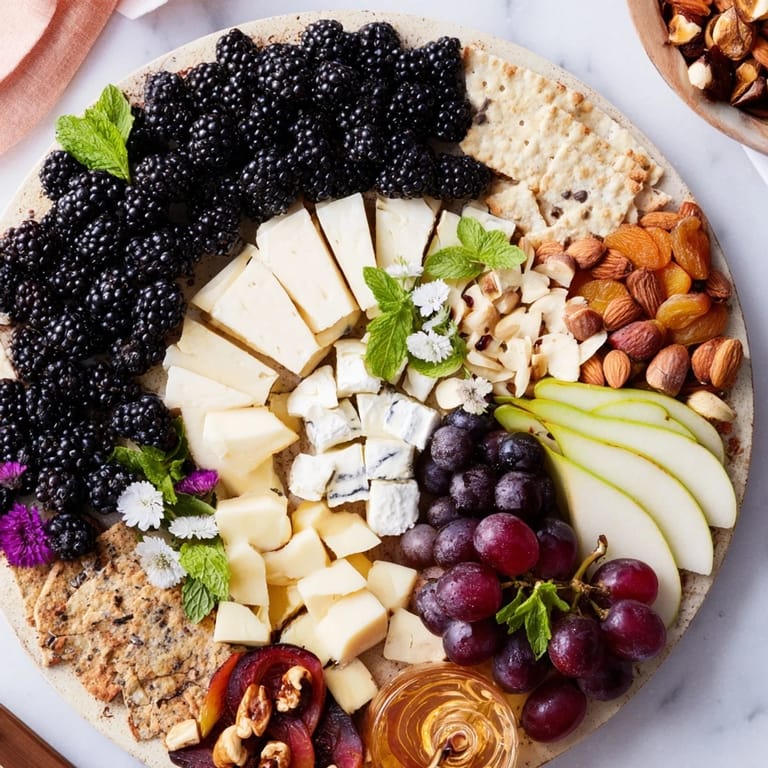
- Lay your blackberries in a gentle S-curve across the center, pressing them just slightly so they nestle into place. Step back—this curve is your meditation point.
- Build the light side:
- Arrange goat cheese, Manchego, pear slices, white grapes, raw almonds, and rice crackers on one half, leaving small gaps so each element breathes. Think about how your guests will grab things, not just how it looks.
- Balance with the dark side:
- Mirror the arrangement on the opposite half with blue cheese, Gouda, plum slices, dark grapes, roasted hazelnuts, and dark crisps. The visual weight should feel equal even though nothing matches exactly.
- Finish with grace:
- Scatter mint leaves across both sides and place edible flowers wherever the board feels too sparse. Serve immediately so every element stays at its peak.
 Save
Save There's a moment that happens on boards like this, usually ten minutes in, when someone stops mid-conversation and says something like, 'I've never had these two flavors together before.' That's the moment you've created something worth making, something that shifts how people taste.
The Philosophy of Opposites
The yin-yang isn't just about visual symmetry—it's about flavor physics. Creamy cheeses need sharp companions to sing. Delicate fruits need roasted nuts for weight. Mild crackers need intense spreads. When you understand this, you stop fighting your ingredients and start orchestrating them.
Seasonal Adaptations
In summer, swap the plum for apricots and add fresh berries to the light side. In autumn, use figs and roasted grapes. Winter brings persimmons and pomegranate arils. The blackberry line stays constant, but everything else can dance with the seasons.
Pairings and Presentations
This board doesn't demand wine, but it appreciates it—a crisp sauvignon blanc lets the flavors breathe, while a light-bodied pinot noir won't overpower the delicate cheeses. If you're pairing with cocktails, something herbal and gin-based echoes the mint beautifully.
- Add honeycomb to the light side if you want unexpected sweetness and a slight mineral note.
- A smear of fig jam on the dark side gives complexity without overwhelming the blue cheese's intensity.
- Keep one small bowl aside with extra almonds or spreads in case guests want more of something specific.
 Save
Save The best boards aren't the ones with the most expensive ingredients—they're the ones where someone took time to arrange them with intention. Make this for people you want to linger with.
Recipe Guide
- → How do I create the dividing line effect on the board?
Arrange fresh blackberries in a curved line across the center of your serving board to visually separate the light and dark ingredient sections.
- → Can I swap the cheeses with other varieties?
Yes, feel free to substitute cheeses with similar textures or flavors, adjusting to seasonal availability or personal preference.
- → What are good pairing options for this board?
The balance of cheeses and fruits pairs excellently with crisp white wines or light-bodied reds to complement the contrasting flavors.
- → Are there alternatives for nuts included on the board?
You can replace almonds and hazelnuts with other nuts like walnuts or pecans based on your taste and availability.
- → How do I keep the fruits fresh when preparing ahead?
Slice fruits just before serving or lightly coat them with lemon juice to maintain freshness and prevent browning.