 Save
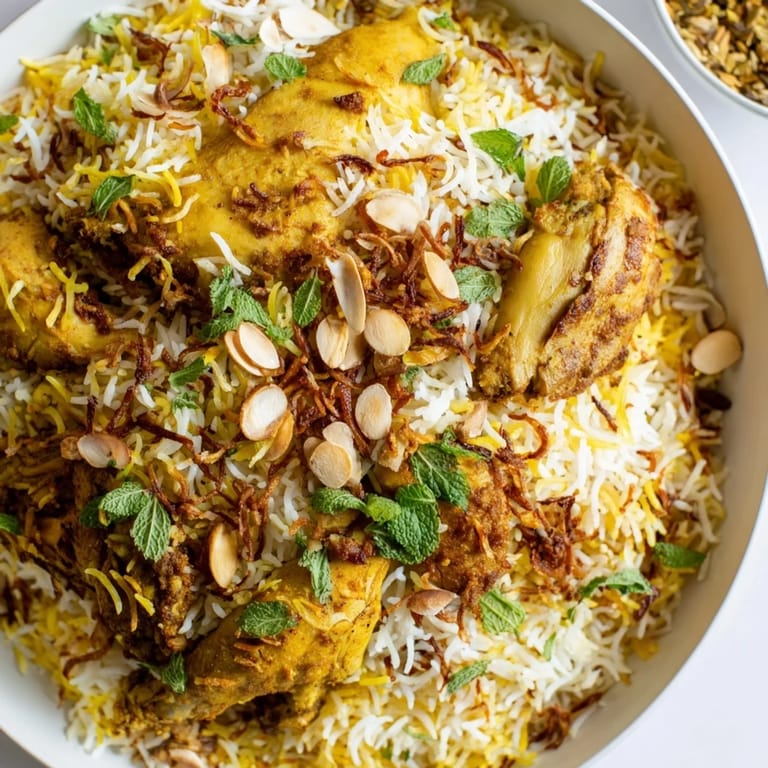
Save The first time I made Kuwaiti biryani, I wasn't thinking about impressing anyone—I just wanted to understand why my neighbor kept insisting it was the only way to cook rice and meat together. Hours later, as I lifted the foil and steam rose from that golden, fragrant pot, I realized she wasn't exaggerating. The layers, the spices, the way everything had melded into something greater than its parts—it clicked. Now, whenever I need to cook something that feels both celebratory and comforting, this is what I reach for.
I remember cooking this for my brother's surprise dinner, and he walked in mid-bake. He stopped in the doorway, closed his eyes, and just stood there—not saying anything, just inhaling. That's when I knew the smell alone had already won him over.
Ingredients
- Bone-in chicken or lamb, 900 g: Using bone-in pieces keeps the meat from drying out; the bones add depth to the flavor as everything cooks together in that sealed pot.
- Plain yogurt, 1 cup: This is your marinade's foundation—it tenderizes the meat while adding a subtle tang that balances the spices.
- Lemon juice, 2 tbsp: Brightens the marinade and keeps the meat from becoming heavy; don't skip this.
- Ginger-garlic paste, 1 tbsp: If you make your own, you'll taste the difference, but store-bought works perfectly fine too.
- Ground turmeric, 1 tsp: This gives the dish its signature golden hue and earthy warmth.
- Ground cumin and coriander, 1½ tsp each: These two are the backbone of the spice blend; together they create that unmistakable Middle Eastern depth.
- Chili powder and garam masala, 1 tsp each: Layer in complexity without overwhelming heat—adjust to your preference.
- Basmati rice, 3 cups: Long-grain basmati is essential; shorter rice will turn mushy and ruin the texture you're aiming for.
- Water, 5 cups: Measure carefully for the par-cooking stage; you want the rice still a bit firm, not fully cooked.
- Whole spices for rice (cloves, cardamom, cinnamon, bay leaf): These infuse the rice with fragrance without overwhelming it; they're separate from the meat marinade for a reason.
- Ghee or unsalted butter: Ghee has a higher smoke point and nuttier flavor, but butter works if that's what you have.
- Large onions, 2: Slice them thin so they caramelize evenly and become almost jam-like in texture.
- Fresh coriander and mint: These herbs go in at the last moment of layering; they brighten everything and prevent the dish from feeling heavy.
- Saffron threads, a pinch, soaked in warm milk: Don't cheap out on saffron—good saffron transforms this dish into something special.
- Nuts and raisins: These add texture and sweetness; optional only if you genuinely don't have them on hand.
- Fried onions for garnish: The final crispy layer that catches light and adds crunch; this detail matters more than you'd think.
Tired of Takeout? 🥡
Get 10 meals you can make faster than delivery arrives. Seriously.
One email. No spam. Unsubscribe anytime.
Instructions
- Build the marinade and coat the meat:
- Whisk together yogurt, lemon juice, ginger-garlic paste, and all the ground spices in a large bowl—the mixture should smell alive and complex. Add your meat pieces and make sure every surface touches the marinade; cover and let it sit for at least an hour, preferably overnight in the fridge so the flavors really sink in.
- Prep the rice properly:
- Rinse the basmati under cold water until the water runs almost clear; this removes excess starch and ensures separate grains instead of clumping. Soak it for 30 minutes, then drain completely—this extra step is what separates good biryani from mediocre.
- Par-cook the rice with whole spices:
- Bring salted water to a rolling boil, then add the drained rice along with cloves, cardamom, cinnamon, and bay leaf. This is where the fragrance begins—watch for the moment the rice looks about 70 percent cooked, still with a slight firmness when you bite a grain. Drain immediately and set aside.
- Caramelize the onions:
- Heat ghee in your ovenproof pot and add the thinly sliced onions; let them sit undisturbed for a minute or two, then stir, letting them turn deep golden brown over about 12 to 15 minutes. This is when the kitchen starts to smell really good—that's your cue you're on the right track. Remove half for garnish later.
- Sear and partially cook the meat:
- Add your marinated meat to the pot with the remaining onions and let it brown on all sides for 5 to 7 minutes; this sealing creates flavor. Then lower the heat, cover, and let it cook gently for 20 to 25 minutes if using chicken, or 35 to 40 minutes for lamb—add a splash of water if the bottom starts to stick.
- Layer everything with intention:
- Sprinkle half your fresh herbs, raisins, and toasted nuts over the cooked meat. Spread half the par-cooked rice evenly over this layer, then add the remaining herbs, raisins, and nuts on top, and finally crown it all with the remaining rice. Each layer is its own flavor note that will meld during baking.
- Add the golden finishing touch:
- Drizzle that saffron-soaked milk evenly over the top layer of rice—the threads will color and perfume everything beneath. Dot generously with ghee or butter so it can soak down through the rice as it bakes.
- Seal and bake:
- Cover the pot with foil first, pressing it against the rice surface, then place the lid on top; this traps the steam and creates the signature tender texture. Bake at 180°C (350°F) for 30 to 35 minutes, and resist the urge to peek—every time you lift that lid, heat escapes and you lose the magic.
- Rest and fluff:
- Let the pot sit undisturbed for 10 minutes after removing from the oven; this allows everything to settle. Then gently fluff with a fork, being careful not to mash the grains, and serve immediately with those reserved fried onions scattered on top.
 Save
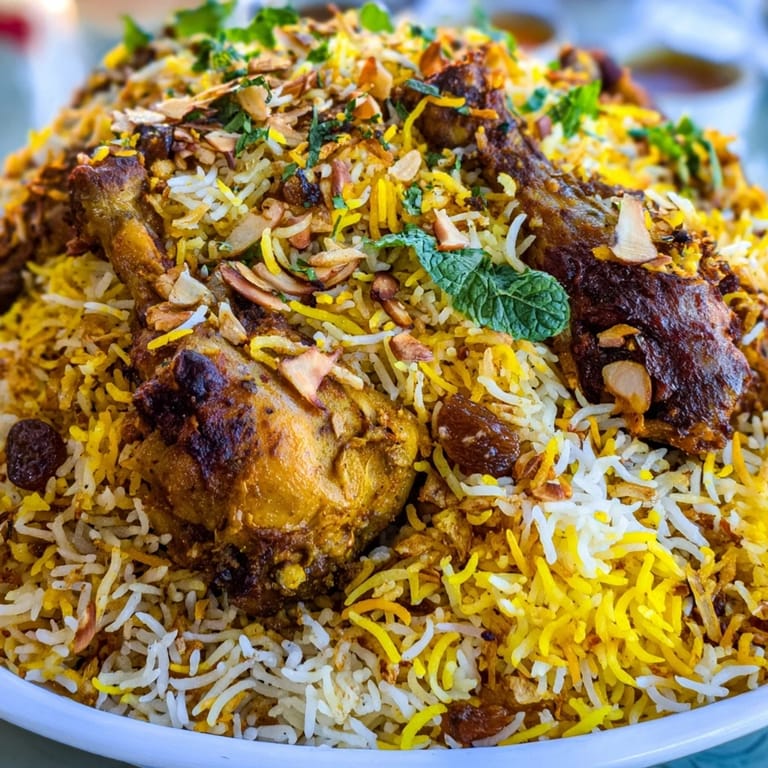
Save One evening, my daughter asked why this dish took so long to make when we could order takeout in 20 minutes. Halfway through eating, she understood without me saying a word—some things can't be rushed, and that's exactly the point.
The Art of Layering
Layering isn't just technique; it's how you ensure every spoonful tastes complete. When you alternate meat, herbs, and rice, you're creating pockets of flavor that will surprise you as you eat. The top layer of rice with saffron milk becomes slightly firm, almost custard-like at the very bottom where it touches the ghee, while the middle layers stay soft and aromatic. I learned this by accident the first time I didn't layer properly and got patches of bland rice—now I'm almost meditative about it.
Why Basmati Rice Matters
Basmati isn't just a fancy name for long-grain rice. It has a delicate structure that stays intact even after being soaked, par-cooked, and then baked. When you use basmati properly—rinsed, soaked, and par-cooked to just the right firmness—each grain absorbs flavor while remaining distinct. Jasmine rice might seem like a substitute, but it will turn into mush, and you'll lose the whole experience. I once tried to cut corners and the result was regrettable.
The Finishing Touches That Change Everything
Fried onions scattered over the top, fresh herbs layered into the rice, a pinch of saffron soaked in milk—these aren't decorations, they're the final flavor notes. The fried onions add crunch and a hint of caramel, the herbs cut through any heaviness, and the saffron brings elegance and visual drama. I skip these sometimes when I'm lazy, and the dish is still good, but it's never quite as memorable.
- Toast your nuts lightly in a dry pan before adding them; this brings out their natural oils and makes them taste fresher.
- If you don't have fried onions, make them by quickly frying thin slices of onion in oil until they're golden and crispy.
- Add a splash of rose water to the saffron milk if you want an extra layer of floral complexity—it's traditional and transformative.
 Save
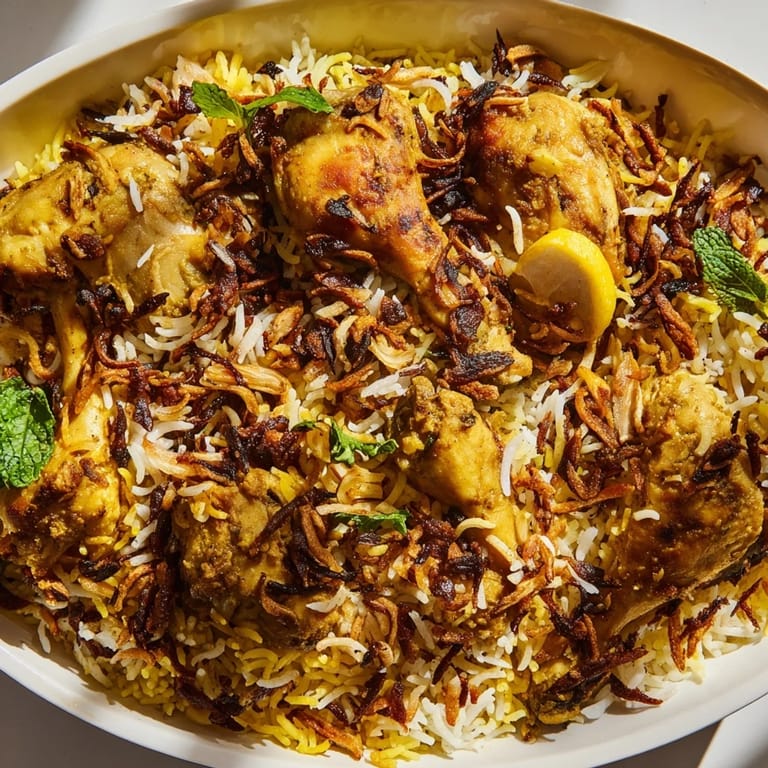
Save This biryani is the kind of dish that turns an ordinary dinner into something people remember. Make it once, and someone will inevitably ask you to make it again.
Recipe Guide
- → How do I ensure the rice is fluffy and not sticky?
Rinse the basmati rice several times until water runs clear to remove excess starch, then soak for 30 minutes. Par-cooking the rice until about 70% done before layering helps keep grains separate when baked.
- → Can I use lamb or chicken interchangeably?
Yes, both bone-in chicken pieces and lamb work well. Marinating enhances tenderness and flavor regardless of the choice, with adjustments in cooking time accordingly.
- → What role does saffron play in this dish?
Saffron adds a subtle floral aroma and a rich golden hue to the rice, enhancing both the appearance and flavor profile of the layered dish.
- → Is it necessary to caramelize the onions?
Caramelizing the onions brings sweetness and depth that balances the spices and richness of the meat, contributing to the overall flavor complexity.
- → What alternatives can be used for nuts in this dish?
Toasted slivered almonds or cashews provide texture and nuttiness, but they can be omitted or replaced with other toasted seeds or nuts based on preference or dietary needs.